1. Generalization (Bottom-Up Approach) – UP CASTING
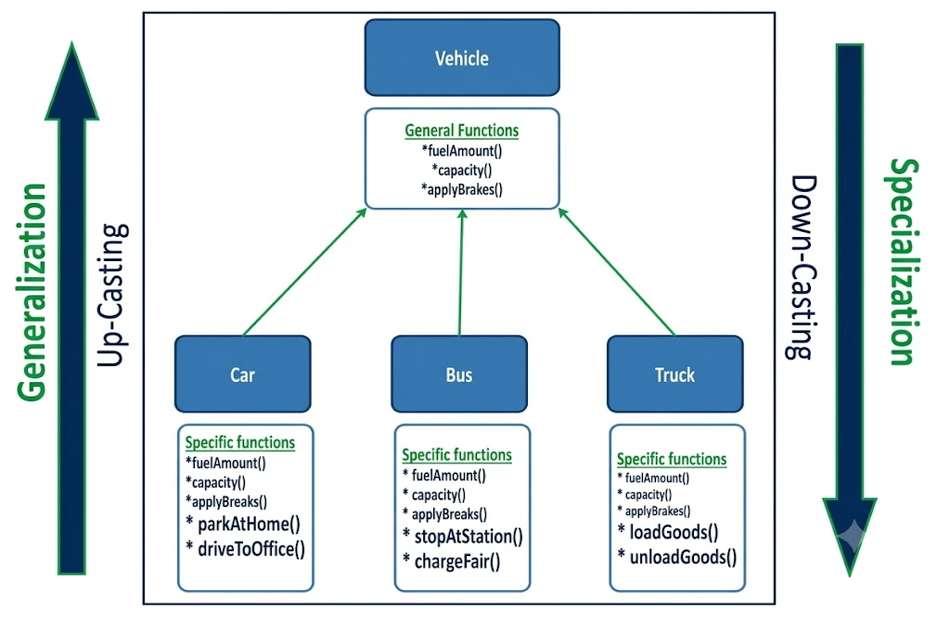
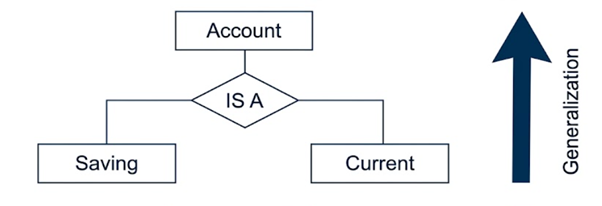
Generalization is the process of combining two or more lower-level entity sets that have common characteristics into a single higher-level entity set. It identifies the common attributes and features shared by different entities and places them in one general entity.
It follows a bottom-up approach, because we start with specific entities and move towards a more general entity. Generalization helps to reduce redundancy by keeping common attributes in one place instead of repeating them in different entity sets.
Specific entities → Common features → General entity
Example-:
2. Specialization (Top-Down Approach) – DOWN CASTING
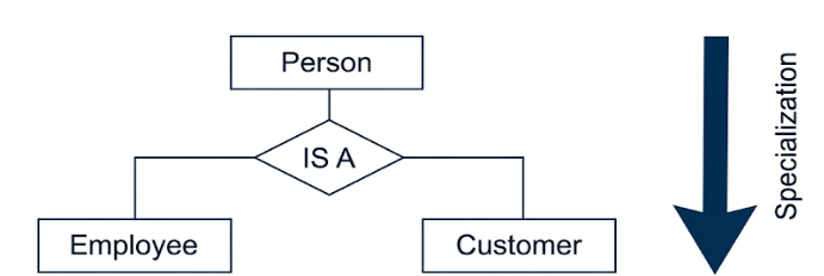
Specialization is the opposite of generalization. It starts with a higher-level entity set and divides it into two or more lower-level specialized entity sets based on their distinctive or specific characteristics.
It follows a top-down approach, because we start with a general entity and move towards more specific entities. Each specialized entity can have its own attributes in addition to the attributes inherited from the higher-level entity.
General entity → Specific features → Specialized entities
Example:
3. Aggregation
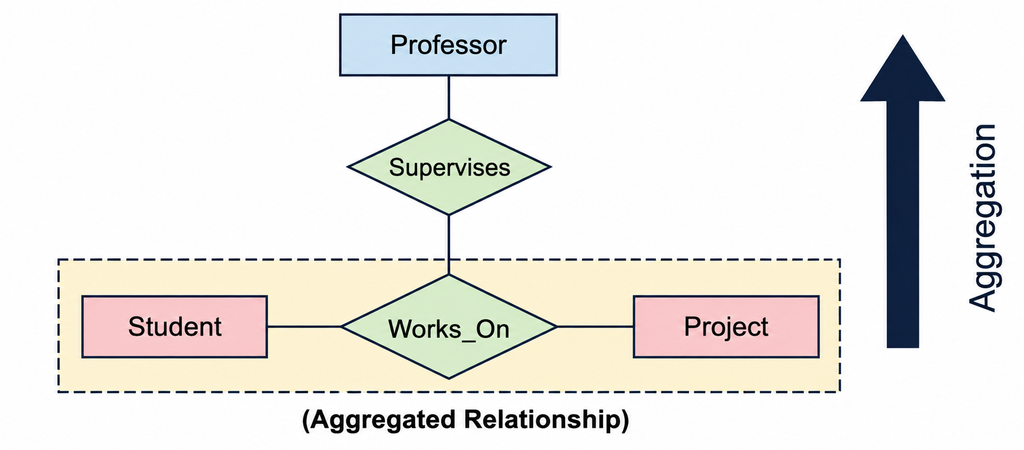
Aggregation is an abstraction concept in the ER model that allows a relationship between two entities to be treated as a higher-level entity. In simple words, it allows us to consider an entire relationship set, along with its participating entities, as a single unit.
Aggregation is useful when we need to create a relationship between an existing relationship and another entity. It helps represent complex real-world situations in a simple and understandable way.
Entities → Relationship → Treat relationship as a higher-level entity
Example: