Digital audio plays a major role in modern communication and entertainment systems today. It converts real-world sound into digital form so that computers can store and process it easily. With the growth of the internet, digital audio has become a key part of music apps, online classes, and video platforms. It improves sound quality and makes sharing audio faster and more efficient. Moreover, technologies like audio compression and streaming audio help reduce file size and support real-time listening over networks. These technologies together make audio access smooth and user-friendly in daily life.
In today’s digital world, people use audio in smartphones, laptops, and smart devices for learning, entertainment, and communication. From music streaming apps to online meetings, digital audio is everywhere. It helps users enjoy high-quality sound without needing large storage space or complex systems. Therefore, understanding digital audio and its related technologies is very important. These concepts also support modern industries like media, education, healthcare, and gaming by improving audio delivery systems.
1. Digital Audio
Digital audio is the representation of sound in digital form using binary data (0s and 1s). It is created by converting analog sound signals into digital signals through a process called Analog-to-Digital Conversion (ADC).
During this process, the continuous sound signal is sampled at regular intervals, and each sample is converted into a numerical value. These values are stored and processed in digital form.
Digital audio is widely used in computers, smartphones, digital music players, video conferencing, and multimedia systems. It allows sound to be easily recorded, stored, edited, transmitted, and reproduced.
One of the major advantages of digital audio is that it can be copied and transmitted without introducing additional noise from the copying process. Its quality depends on factors such as sampling rate, bit depth, and audio compression.
Examples of digital audio formats include:
- MP3
- WAV
- AAC
- FLAC
- WMA
In simple words: Digital audio is a method of storing and transmitting sound using numerical data instead of continuous analog signals.
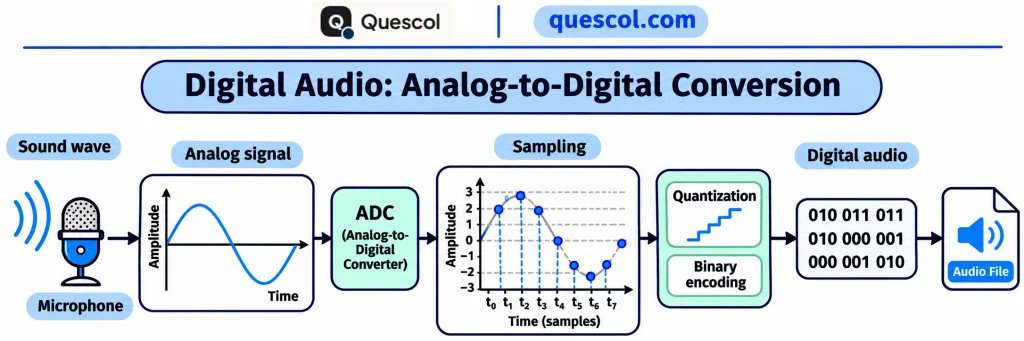
Figure: Digital Audio
Functions of Digital Audio
1. Sound Conversion
Digital audio converts analog sound signals into digital form using binary data (0s and 1s) for easy processing by computers.
2. Audio Recording
It helps in recording voice, music, and other sounds in digital format for storage and later use.
3. Sound Processing
Digital audio allows editing, mixing, filtering, and enhancing sound using audio software tools.
4. Storage of Audio Data
It stores audio files in digital devices like mobile phones, computers, and cloud storage systems efficiently.
5. Audio Playback
It converts digital signals back into sound so users can listen through speakers or headphones clearly.
6. Transmission of Audio
Digital audio enables fast and accurate transmission of sound over networks for calls, streaming, and communication applications.
Working of Digital Audio
1. Sound Capture (Input Stage)
First, sound is captured using a microphone or recording device. This sound is in analog form and represents real-world audio like voice or music.
2. Analog to Digital Conversion
The analog sound signal is converted into digital form using an ADC (Analog to Digital Converter). This process changes sound waves into binary data (0s and 1s).
3. Sampling Process
The sound is measured at regular intervals (sampling). These samples help in representing the original sound accurately in digital format.
4. Quantization and Encoding
Each sample is assigned a numerical value during quantization. Then, the data is encoded into a digital audio file format like MP3, WAV, or AAC.
5. Storage or Transmission
The digital audio file is stored in devices like computers or mobile phones or transmitted through networks for communication or streaming.
6. Digital to Analog Conversion (Playback)
When played, the digital data is converted back into analog sound using a DAC (Digital to Analog Converter), so users can hear the original audio through speakers or headphones.
Advantages of Digital Audio
1. High Sound Quality
Digital audio provides clear and high-quality sound with very low noise. It improves the listening experience in music, videos, and voice communication.
2. Easy Storage and Sharing
Audio files can be stored in devices like mobile phones and computers. They can also be shared easily through apps and the internet.
3. Simple Editing
Digital audio can be edited using software tools. Users can cut, mix, and enhance audio without much quality loss.
4. Supports Compression
It works well with audio compression techniques, which reduce file size. This helps in saving storage space and improving efficiency.
5. Fast Transmission
Digital audio can be transmitted quickly over networks. It is useful for online calls, streaming, and messaging services.
6. Device Compatibility
It is compatible with many devices like smartphones, laptops, and tablets. No special equipment is required to play digital audio.
Disadvantages of Digital Audio
1. Requires Digital Devices
Digital audio cannot be played without electronic devices like smartphones, computers, or speakers. This limits usage in non-digital environments.
2. Possible Quality Loss
During conversion from analog to digital or due to compression, there may be slight loss in sound quality.
3. Storage Dependency
High-quality digital audio files can take more storage space if they are not compressed properly.
4. Need for Software
Editing and processing digital audio requires specific software tools, which may not always be easy for beginners.
5. Internet Dependence for Sharing
For online sharing and streaming, a stable internet connection is required. Without it, access becomes difficult.
6. Security Risks
Digital audio files can be copied, shared, or pirated easily without permission, leading to copyright issues.
Applications of Digital Audio
1. Music Industry
Digital audio is widely used in music production, recording, and distribution. Artists create songs in digital format and release them on online platforms.
2. Online Education
It is used in e-learning platforms for lectures, tutorials, and recorded classes. Students can listen to lessons anytime and anywhere.
3. Communication Systems
Digital audio is used in voice calls, video conferencing, and messaging apps. It ensures clear and fast communication between users.
4. Entertainment Industry
It plays a key role in movies, TV shows, podcasts, and gaming. Background music and sound effects are created using digital audio.
5. Broadcasting
Radio stations and online streaming services use digital audio for live and recorded broadcasts. It improves sound quality and reach.
6. Voice Assistants
Devices like Alexa, Google Assistant, and Siri use digital audio to understand and respond to user commands.
2. Audio Compression
Audio compression is the process of reducing the file size of digital audio by decreasing the amount of data required to represent sound. It makes audio files smaller, allowing them to be stored, shared, and transmitted more efficiently.
Audio compression works by removing less important audio information or representing the sound data more efficiently. Depending on the compression method used, it may reduce file size without affecting sound quality significantly or may cause some loss of audio quality.
Audio compression is mainly classified into two types:
- Lossy Compression: It reduces file size by permanently removing some audio information that may be less noticeable to human listeners. Examples include MP3 and AAC.
- Lossless Compression: It reduces file size without permanently removing audio information. The original audio can be reconstructed exactly. Examples include FLAC and ALAC.
Audio compression is widely used in music streaming platforms, digital audio players, video conferencing, and online communication systems.
For example: When you download an MP3 song instead of an uncompressed WAV file containing the same audio, the MP3 file is generally much smaller because it uses lossy audio compression. This saves storage space and reduces the amount of data needed for transmission. Platforms such as YouTube and Spotify also use compressed audio formats to deliver audio efficiently over the internet.
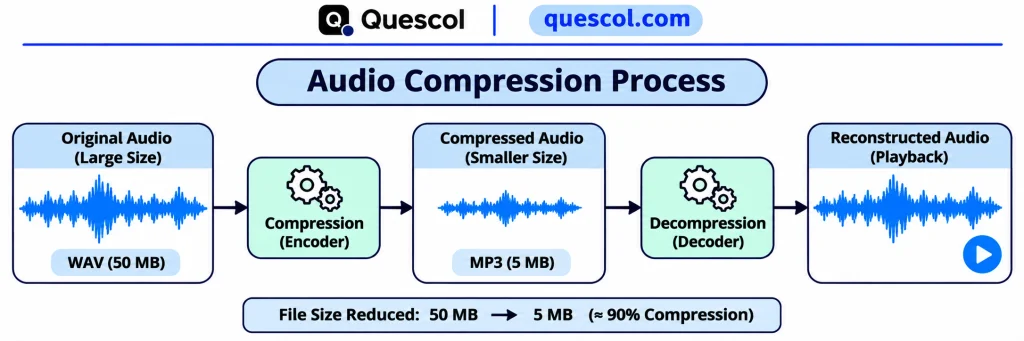
Figure: Audio Compression
Functions of Audio Compression
1. Reducing File Size
Audio compression reduces the size of audio files by removing unnecessary or repeated data while maintaining acceptable sound quality.
2. Optimizing Storage Usage
It helps in efficient use of storage space by making audio files smaller and easier to store on devices and cloud systems.
3. Speeding Up Data Transfer
Compressed audio files are transmitted faster over networks because they require less bandwidth and data usage.
4. Improving Streaming Performance
It supports smooth audio streaming by reducing loading time and preventing buffering during playback.
5. Encoding and Decoding Audio
Audio compression encodes raw audio into a compressed format and decodes it back into playable sound when needed.
6. Supporting Multiple Formats
It enables audio to be converted into formats like MP3, AAC, and OGG for compatibility across different devices and applications.
Working of Audio Compression
1. Input Audio Signal
First, the original audio signal (voice, music, or sound) is taken as input in analog or digital form. This is the raw sound that needs to be compressed.
2. Sampling and Quantization
The analog sound is converted into digital form by sampling (taking sound values at regular intervals) and quantization (assigning numerical values to sound signals).
3. Redundant Data Removal
The system identifies and removes unnecessary or repeated sound data that the human ear cannot easily notice, reducing file size.
4. Encoding Process
The remaining audio data is encoded using compression algorithms like MP3, AAC, or OGG to make the file smaller.
5. File Storage or Transmission
The compressed audio file is stored in memory or transmitted over networks like the internet for streaming or sharing.
6. Decompression at Receiver Side
When the audio is played, it is decompressed back into sound form so that users can hear it clearly through speakers or headphones.
Advantages of Audio Compression
1. Reduces File Size
Audio compression decreases the size of audio files without greatly affecting sound quality. This makes storage more efficient.
2. Saves Storage Space
Since compressed files are smaller, they occupy less space on mobile phones, computers, and cloud storage.
3. Faster Data Transfer
Compressed audio files can be uploaded and downloaded quickly over the internet, improving sharing speed.
4. Improves Streaming Performance
It helps in smooth audio streaming by reducing buffering and loading time on platforms like Spotify and YouTube.
5. Efficient Bandwidth Usage
Audio compression uses less internet bandwidth, which is useful for users with limited data plans.
6. Easy Sharing
Smaller file sizes make it easy to send audio files through messaging apps and email without delays.
Disadvantages of Audio Compression
1. Loss of Audio Quality
In many compression methods, some sound details are removed, which can reduce overall audio quality.
2. Irreversible Changes
In lossy compression, the original audio cannot be fully restored after compression.
3. Distortion in High Compression
If the compression level is too high, the audio may sound distorted or unclear.
4. Processing Requirement
Compression and decompression require software and processing power, which may slow down low-end devices.
5. Not Suitable for Professional Use
High-quality recording industries like music production may avoid heavy compression due to quality loss.
6. Compatibility Issues
Some compressed audio formats may not be supported by all devices or media players.
Applications of Audio Compression
1. Music Streaming Platforms
Audio compression is used in apps like Spotify and YouTube Music to deliver songs quickly with reduced file size and smooth playback.
2. Online Communication
It is used in voice calls, video calls, and messaging apps to send audio efficiently without delays or heavy data usage.
3. Social Media Apps
Platforms like WhatsApp, Instagram, and Facebook use audio compression for voice notes and audio sharing.
4. Broadcasting Systems
Radio and online broadcasting services use compressed audio to transmit sound clearly over long distances.
5. Cloud Storage Services
Compressed audio files help save storage space in cloud platforms like Google Drive and OneDrive.
6. Multimedia Applications
It is widely used in gaming, videos, and e-learning apps to optimize sound performance without increasing file size.
3. Streaming Audio
Streaming audio is a method of playing audio content directly over the internet without downloading the entire audio file before playback. It works by transmitting audio data in small packets over a network.
The audio data is received and temporarily stored in a buffer, allowing users to listen to the content while the remaining data continues to load in the background.
Streaming audio reduces waiting time and provides quick access to music, podcasts, live radio, and other audio content. It is widely used in online entertainment platforms, mobile applications, and digital communication systems.
For example: When you listen to songs on Spotify or access live radio through an online application, streaming audio is used. The audio starts playing while the remaining data continues to arrive over the internet. Users do not need to download the complete audio file before listening.Functions of Streaming Audio
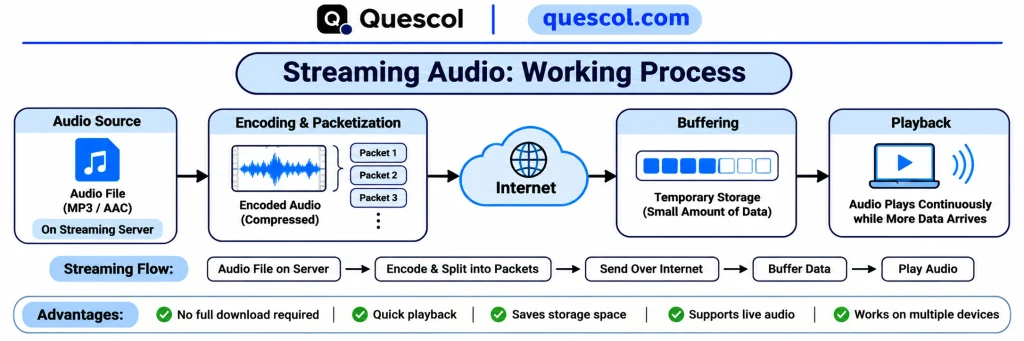
Figure: Streaming Audio
1. Real-Time Audio Delivery
Streaming audio delivers sound in real time over the internet without waiting for full download of the file.
2. Continuous Data Transmission
It sends audio in small data packets continuously, ensuring smooth playback while listening.
3. Buffer Management
Streaming systems store a small portion of audio in temporary memory (buffer) to reduce interruptions and delays.
4. Adaptive Quality Control
It automatically adjusts audio quality based on internet speed to avoid buffering and maintain smooth listening.
5. On-Demand Playback
Users can select and play any audio content instantly without storing it permanently on the device.
6. Cross-Device Accessibility
Streaming audio works across multiple devices like smartphones, laptops, and smart speakers using the internet.
Working of Streaming Audio
1. Audio Request from User
When a user selects a song, podcast, or live audio, the streaming app sends a request to the server where the audio is stored.
2. Data Encoding on Server
The server converts the audio into a compressed digital format so it can be sent efficiently over the internet.
3. Packet Transmission
The audio is divided into small data packets and sent continuously over the network to the user’s device.
4. Buffering Process
The device stores a small portion of audio in memory (buffer) before playing, ensuring smooth playback without interruptions.
5. Real-Time Playback
As packets keep arriving, the audio starts playing instantly while remaining data continues to download in the background.
6. Continuous Streaming
The process continues until the audio ends, providing uninterrupted listening as long as the internet connection is stable.
Advantages of Streaming Audio
1. No Need to Download Files
Streaming audio allows users to listen to music or audio instantly without downloading the full file, saving time and effort.
2. Saves Storage Space
Since audio is played online, it does not occupy permanent space on the device storage.
3. Instant Playback
Users can start listening immediately, which improves user experience and convenience.
4. Wide Content Access
Streaming platforms provide access to a large collection of songs, podcasts, and live audio anytime.
5. Easy Accessibility
Users can access audio content from anywhere using smartphones, tablets, or laptops with internet connectivity.
6. Regular Updates
Streaming services frequently update their content libraries, giving users the latest music and audio programs.
Disadvantages of Streaming Audio
1. Requires Internet Connection
Streaming audio depends on a stable internet connection. Without internet, audio cannot be played.
2. Buffering Issues
Slow internet speed can cause buffering, delays, or interruptions while listening.
3. High Data Usage
Continuous streaming consumes a large amount of mobile data, which can be costly for users with limited plans.
4. Audio Quality Variation
Sound quality may reduce or change based on network speed and bandwidth availability.
5. Subscription Costs
Many streaming platforms require paid subscriptions for full access to premium content.
6. Limited Offline Access
Without downloading options, users may not be able to access audio when they are offline.
Applications of Streaming Audio
1. Music Streaming Platforms
Streaming audio is widely used in apps like Spotify, YouTube Music, and Apple Music to provide instant access to songs and playlists.
2. Online Radio Services
It is used in internet radio stations that broadcast live music, news, and talk shows to global audiences in real time.
3. Podcast Platforms
Streaming audio supports podcasts where users can listen to educational, entertainment, and storytelling content anytime.
4. Live Events and Concerts
It is used for streaming live concerts, sports commentary, and special events to viewers across different locations.
5. E-Learning Platforms
Online classes and recorded lectures use streaming audio to help students learn without downloading large files.
6. Entertainment Apps
OTT platforms and media apps use streaming audio for movies, web series, and background sound delivery.
Conclusion
Digital audio, audio compression, and streaming audio are the three important technologies used in modern communication and multimedia systems. Digital audio converts real-world sound into digital form, which makes it easy to store, process, and share across devices. It improves sound clarity and supports various applications like music, education, and communication.
Audio compression plays a key role in reducing file size without heavily affecting sound quality. It helps in saving storage space, improving data transfer speed, and supporting smooth audio streaming over networks. However, it may sometimes reduce audio quality if over-compressed.
Streaming audio allows users to listen to music and audio content instantly without downloading files. It provides real-time access, saves storage space, and supports on-demand entertainment. Overall, these technologies together make audio systems faster, smarter, and more efficient in today’s digital world.
Shrinking data for the network is also a job of the presentation layer.