Routing
In computer networks, data is transferred from one device to another through a process called routing. When a sender wants to transmit information, the network must determine how the data should reach the intended receiver or receivers.
Depending on the number of destination devices, routing can be performed in different ways. Two important routing techniques used in computer networks are Unicast Routing and Multicast Routing.
Unicast Routing is used when data is sent from one sender to a single receiver. Multicast Routing is used when the same data needs to be sent from one sender to a selected group of receivers.
Both techniques help deliver data efficiently, but they differ in their communication methods, addressing, packet forwarding, and applications.
What Is Unicast Routing?
Unicast Routing is a network communication method in which data packets are transferred from a single source device to one specific destination device.
It follows a one-to-one communication method, meaning that one sender communicates with one receiver at a time.
In Unicast Routing, each destination device is identified using a unique unicast IP address. Routers examine the destination IP address of incoming packets and forward them toward the intended receiver using their routing tables.
If the sender wants to transmit the same data to multiple receivers using unicast communication, it must send separate copies of the data to each receiver.
Unicast Routing is commonly used in everyday Internet communication, such as browsing websites, sending emails, downloading files, and accessing online applications.
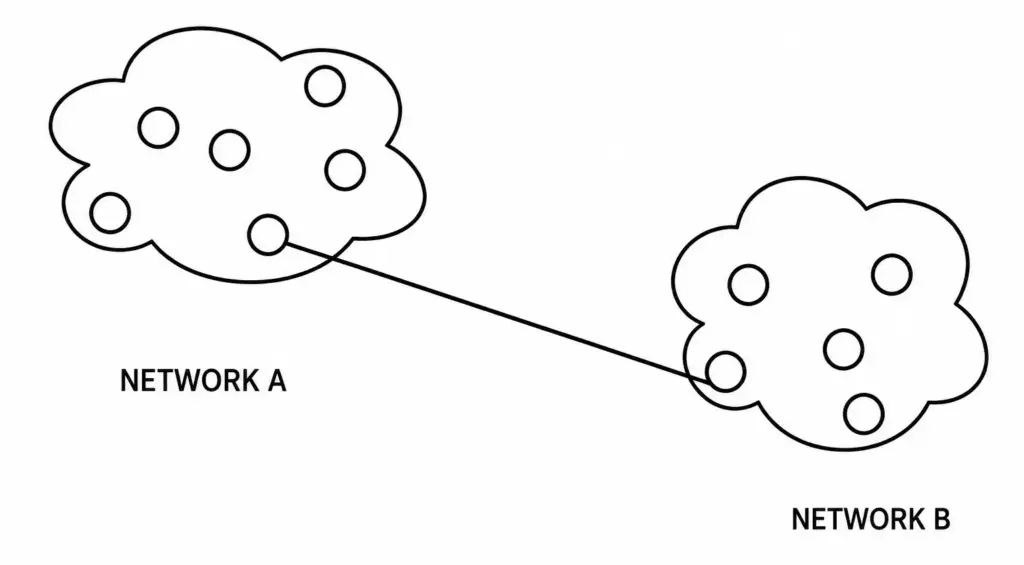
Figure : Unicast Routing
Working of Unicast Routing
The working of Unicast Routing can be explained through the following steps:
- Data Creation: The sender device creates data that needs to be transmitted to another device.
- Destination Addressing: The sender adds the destination device’s unicast IP address to the packet header.
- Packet Transmission: The packet is sent to the network through the sender’s router.
- Route Identification: The router examines the destination IP address and checks its routing table to identify the appropriate next hop.
- Packet Forwarding: The router forwards the packet toward the destination through the selected path.
- Packet Delivery: The packet passes through intermediate routers, if required, and finally reaches the intended receiver.
Thus, Unicast Routing delivers data from one sender to one specific receiver.
Example of Unicast Routing
Suppose a computer user wants to open a website hosted on a server.
The user’s computer sends a request to the website server using its destination IP address. The routers forward the packets through the network until they reach the server.
The server then sends the response back to the user’s computer.
In this example, the communication takes place between one source and one destination, which is known as Unicast Routing.
Other examples include:
- Sending an email to a particular recipient.
- Downloading a file from a website.
- Accessing an online banking application.
- Transferring files between two computers.
- Opening a webpage in a browser.
Characteristics of Unicast Routing
- One-to-One Communication: Data is transmitted from one sender to one receiver.
- Unique Destination Address: Each packet contains the unicast IP address of the intended receiver.
- Separate Data Transmission: When multiple receivers need the same data, the sender generally transmits separate unicast streams.
- Individual Delivery: Each communication is intended for a particular destination.
- Common Internet Usage: It is widely used for web browsing, email, file transfers, and other Internet applications.
Advantages of Unicast Routing
- Simple Communication: It provides a straightforward method of sending data between two devices.
- Individual Delivery: Data can be sent to a specific receiver without involving other devices.
- Wide Compatibility: It is supported by almost all IP networks and networking devices.
- Easy Management: Individual communication sessions can be managed separately.
- Reliable Transport Options: It can be used with protocols such as TCP when reliable, ordered delivery is required.
Disadvantages of Unicast Routing
- Higher Bandwidth Usage: Sending the same data to multiple receivers requires separate data streams.
- Increased Network Traffic: Multiple copies of the same information may travel through the network.
- More Sender Resources: The sender may need to maintain separate communication sessions for multiple receivers.
- Less Efficient for Group Communication: It is not always suitable when the same information must be delivered to a large group of users.
What Is Multicast Routing?
Multicast Routing is a network communication method in which data packets are transmitted from a single source device to a selected group of destination devices simultaneously.
It follows a one-to-many communication method, meaning that one sender can transmit the same data to multiple receivers that belong to a multicast group.
In Multicast Routing, devices interested in receiving particular data join a multicast group. The group is identified using a multicast IP address.
Routers use multicast routing information to forward packets only toward network branches that contain interested receivers.
Instead of sending a separate copy of the same data to every receiver from the source, the network can distribute the data through a multicast distribution tree. Copies are created at branching points when necessary.
Multicast Routing is useful for applications where the same information must be delivered to many users at the same time.
Examples include live video streaming, online classes, video conferencing, and live event broadcasting.
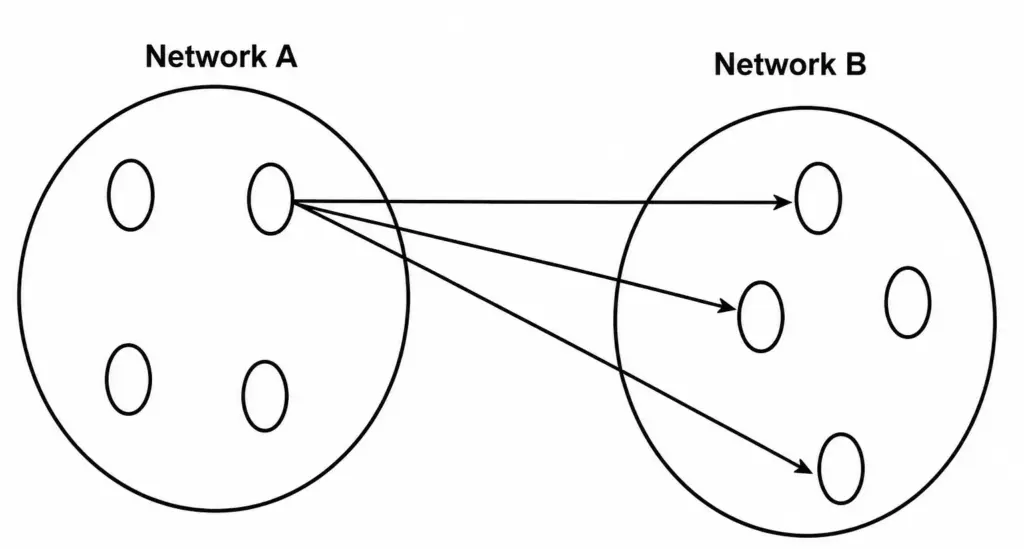
Figure: Multicast Routing
Working of Multicast Routing
The working of Multicast Routing can be explained through the following steps:
- Multicast Group Creation: A multicast group is identified using a multicast IP address.
- Joining the Group: Devices interested in receiving the data join the multicast group.
- Data Transmission: The sender transmits data packets using the multicast destination address.
- Packet Reception: The router receives the multicast packet and examines its destination multicast address.
- Packet Forwarding: The router uses multicast routing information to determine which outgoing interfaces have interested receivers.
- Packet Replication: If the packet needs to travel through multiple network branches, the router creates copies and forwards them through the required interfaces.
- Data Delivery: All interested receivers in the multicast group receive the transmitted data.
Thus, Multicast Routing allows one sender to deliver the same information to multiple selected receivers efficiently.
Example of Multicast Routing
Suppose a teacher conducts an online class for 100 students.
Instead of sending 100 separate copies of the same video stream from the source, multicast routing can distribute one stream through the network and replicate packets at the required branching points.
All students who have joined the multicast group can receive the same video data.
This reduces unnecessary duplication of data and helps save network bandwidth.
Other examples include:
- Live video broadcasting.
- Online educational classes.
- Video conferencing.
- Live sports event distribution.
- Distribution of information to multiple network devices.
Characteristics of Multicast Routing
- One-to-Many Communication: Data is transmitted from one sender to a selected group of receivers.
- Multicast Group Address: It uses a multicast IP address to identify the destination group.
- Group Membership: Receivers can join or leave multicast groups according to their requirements.
- Efficient Data Distribution: The network forwards data through a multicast distribution tree and replicates packets at branching points.
- Bandwidth Saving: It avoids sending separate copies from the source to every receiver when multicast distribution is supported.
- Selective Delivery: Data is delivered to interested group members rather than every device on the network.
Advantages of Multicast Routing
- Bandwidth Efficiency: It reduces unnecessary duplicate transmissions when the same data is sent to multiple receivers.
- Reduced Sender Load: The sender does not need to create a separate data stream for every receiver.
- Efficient Group Communication: It supports communication with multiple selected devices simultaneously.
- Scalability: It is useful for distributing the same information to a large number of receivers.
- Reduced Network Traffic: Routers replicate packets only where necessary instead of forwarding separate copies from the source for every receiver.
Disadvantages of Multicast Routing
- Complex Configuration: Setting up and managing multicast routing can be more complicated than unicast routing.
- Router Support Required: Network routers must support multicast forwarding to distribute multicast traffic.
- Group Management Required: The network must maintain information about multicast group membership.
- Security Challenges: Multicast traffic requires suitable access controls to prevent unauthorized receivers from joining groups.
- Limited Application Support: Not all networks and applications support multicast communication.
Protocols Used in Unicast and Multicast Routing
Different protocols are used to support unicast and multicast communication.
Unicast Routing Protocols
The following protocols are commonly used to exchange unicast routing information:
1. RIP (Routing Information Protocol):
RIP is a distance-vector routing protocol that uses hop count to select routes between networks.
2. OSPF (Open Shortest Path First):
OSPF is a link-state routing protocol that calculates suitable routes using the Shortest Path First algorithm.
3. BGP (Border Gateway Protocol):
BGP is a path-vector routing protocol used to exchange routing information between autonomous systems on the Internet.
Multicast Routing Protocols
The following protocols are commonly associated with multicast communication:
1. IGMP (Internet Group Management Protocol):
IGMP is used in IPv4 networks to manage multicast group membership. It allows devices to inform nearby routers about their interest in receiving multicast traffic.
2. PIM (Protocol Independent Multicast):
PIM is a family of multicast routing protocols that uses existing unicast routing information to determine multicast forwarding paths.
3. DVMRP (Distance Vector Multicast Routing Protocol):
DVMRP is a multicast routing protocol that uses distance-vector information to build multicast distribution paths.
4. MOSPF (Multicast Open Shortest Path First):
MOSPF is an extension of OSPF that supports multicast routing using link-state information.
Difference Between Unicast Routing and Multicast Routing
Unicast Routing and Multicast Routing are two important communication techniques used in computer networks. Both deliver data from a source to destination devices, but they differ in the number of receivers and the way packets are distributed.
| Basis | Unicast Routing | Multicast Routing |
|---|---|---|
| Meaning | Sends data from one sender to one receiver | Sends data from one sender to a selected group of receivers |
| Communication Type | One-to-One | One-to-Many |
| Addressing | Unicast IP address | Multicast IP address |
| Number of Receivers | One receiver per communication | Multiple selected receivers |
| Data Transmission | Separate streams for separate receivers | One source stream distributed through multicast paths |
| Bandwidth Usage | May require more bandwidth for multiple receivers | More efficient for group distribution |
| Router Operation | Forwards packets toward a specific destination | Forwards packets through required multicast branches |
| Group Membership | Not required | Required for multicast group communication |
| Protocols | RIP, OSPF, BGP | PIM, DVMRP, MOSPF; IGMP for IPv4 group membership |
| Applications | Web browsing, email, file transfer | Live streaming, online classes, group broadcasting |
Real-Life Applications of Unicast and Multicast Routing
Both routing techniques are used in different real-world situations depending on communication requirements.
Applications of Unicast Routing
- Web Browsing: A user’s computer communicates with a particular web server to access a website.
- Email Communication: Emails are delivered to specific recipient mail servers.
- File Downloads: A user downloads a file from a particular server.
- Online Banking: A user’s device communicates with the bank’s server to access banking services.
- Remote Access: One computer connects to another computer for remote management.
Applications of Multicast Routing
- Live Video Streaming: The same video content can be distributed to multiple receivers through multicast-enabled networks.
- Online Education: Educational content can be distributed to multiple students simultaneously.
- Video Conferencing: Multicast can distribute media streams to interested participants in supported network environments.
- Live Event Broadcasting: The same event can be transmitted to multiple receivers.
- Software Distribution: Updates and information can be distributed to multiple devices in a multicast-enabled network.