The Session Layer is the fifth layer of the OSI (Open Systems Interconnection) model in computer networking. It is responsible for establishing, managing, and terminating communication sessions between two devices. This layer ensures that communication between applications runs smoothly and is properly organized.
In modern networks, the session layer plays an important role in controlling dialogues between systems. It helps in starting a session, maintaining it during data exchange, and closing it properly after communication ends. Therefore, it acts as a bridge that manages continuous interaction between sender and receiver applications.
What is the Session Layer?
The Session Layer is the fifth layer of the OSI (Open Systems Interconnection) model. It is responsible for establishing, managing, maintaining, and terminating communication sessions between two devices or applications over a network.
A session is a logical connection established between two communicating applications to exchange information. The session layer manages this communication and ensures that data exchange takes place in an organized manner.
The main purpose of the session layer is to control the communication between applications running on different devices. It establishes a session before communication begins, maintains the session while data is being exchanged, and terminates it after communication is completed.
For example, when a user logs into an online application, a communication session is created between the user’s device and the server. The session layer conceptually helps manage the beginning, continuation, and ending of such communication.
The session layer also provides important services such as dialogue control, synchronization, token management, and session recovery. These services help two devices communicate properly and manage data exchange efficiently.
The session layer is positioned between the Transport Layer (Layer 4) and the Presentation Layer (Layer 6) in the OSI model.
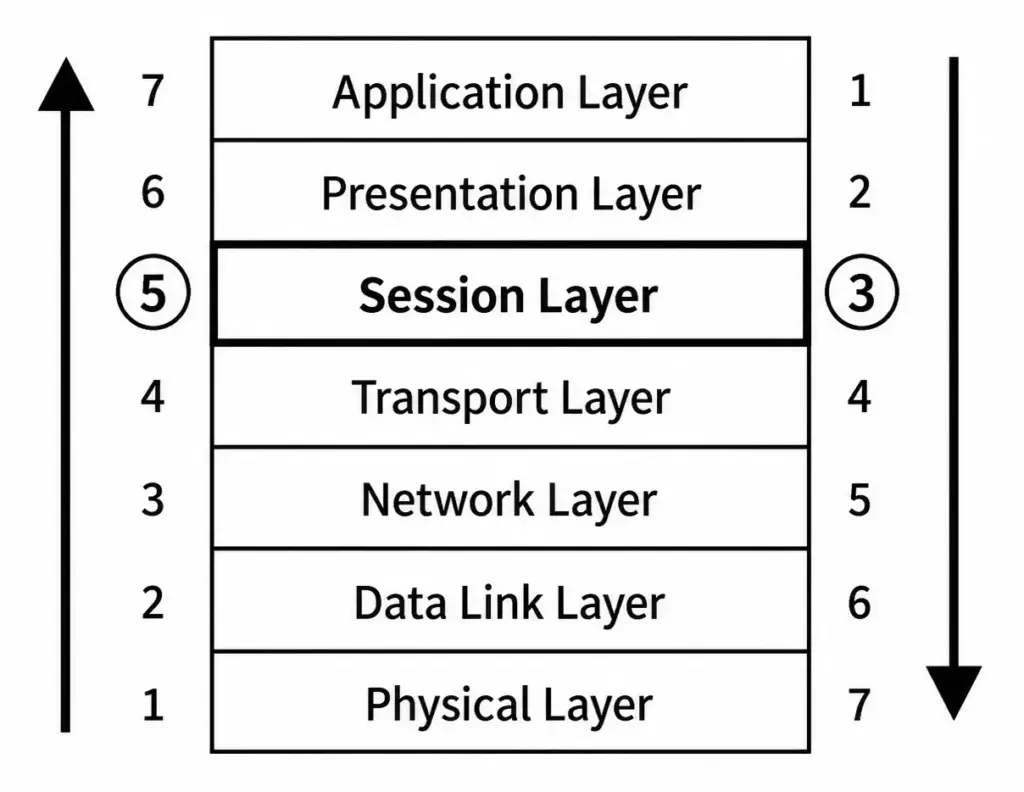
Figure: Session Layer
Capabilities of Session Layer
The Session Layer in the OSI model provides several important capabilities that help in managing communication between two devices. It ensures that sessions between applications are properly created, controlled, and closed in a smooth way.
1. Session Establishment
The Session Layer is responsible for establishing a connection between two communicating devices or applications. It sets up a session before actual data transfer begins. This helps both systems to be ready for communication. As a result, data exchange starts in an organized manner.
2. Session Maintenance
Once a session is established, this layer maintains it throughout the communication process. It ensures that the connection remains active until the data transfer is complete. If any interruption occurs, it helps in continuing the session. This improves communication stability.
3. Dialog Control
The Session Layer controls the direction of communication between devices. It decides whether communication should be half-duplex or full-duplex. This means it manages who can send data and when. Therefore, communication becomes well-organized and controlled.
4. Synchronization
This layer provides synchronization by adding checkpoints during data transfer. If the system fails or disconnects, communication can resume from the last checkpoint. This avoids re-sending the entire data again. It improves efficiency and saves time.
5. Session Termination
After completing communication, the Session Layer properly terminates the session. It ensures that both devices agree to close the connection. This prevents unnecessary resource usage. Therefore, it helps in clean and proper ending of communication.
Design Issues of Session Layer
The Session Layer is the fifth layer of the OSI (Open Systems Interconnection) model. It is responsible for establishing, managing, and terminating communication sessions between two applications running on different devices.
The Session Layer ensures that communication takes place in an organized and controlled manner. While designing this layer, several important issues must be considered to maintain reliable communication, proper data exchange, and efficient session management.
The major design issues of the Session Layer are explained below.
1. Session Establishment and Termination
Session establishment and termination are important functions of the Session Layer. It is responsible for creating a communication session between two applications before data exchange begins.
- The Session Layer establishes a connection between the sender and receiver.
- It ensures that both communicating applications are ready for data exchange.
- It manages the session throughout the communication process.
- After completing the communication, it properly terminates the session and releases the resources.
Example: When a user logs in to an online application, a session is established. When the user logs out, the session is terminated.
2. Dialog Control
Dialog control determines how data is exchanged between two communicating devices. It manages the direction of communication and controls which device can transmit data at a particular time.
Dialog control supports the following communication modes:
- Simplex Mode: Data transmission takes place in only one direction.
- Half-Duplex Mode: Both devices can transmit data, but only one device can send data at a time.
- Full-Duplex Mode: Both devices can send and receive data simultaneously.
Dialog control helps organize communication and prevents conflicts during data exchange.
Example: During an online meeting, both participants can communicate simultaneously using full-duplex communication.
3. Synchronization
Synchronization is the process of maintaining proper coordination during data transmission. The Session Layer uses synchronization points, also called checkpoints, to divide long communication sessions into smaller parts.
- It inserts checkpoints at regular intervals during data transmission.
- These checkpoints help track the progress of communication.
- If a failure occurs, the session can resume from the last checkpoint instead of starting from the beginning.
- It reduces unnecessary retransmission and saves time and network resources.
Example: While transferring a large file, if a network failure occurs, synchronization allows the transfer to resume from the last saved checkpoint.
4. Error Recovery
Error recovery is another important design issue of the Session Layer. It helps maintain communication when interruptions or failures occur during an active session.
- It identifies interruptions that affect an ongoing session.
- It uses synchronization points to identify the last successfully completed part of communication.
- It helps resume communication from an appropriate checkpoint.
- It reduces the need to restart the entire communication process.
Example: If a video conference is interrupted due to a temporary network failure, session recovery mechanisms may help restore the communication.
5. Session Management
Session management involves creating, maintaining, controlling, and closing multiple communication sessions between applications.
- It manages multiple sessions running simultaneously.
- It maintains information about active communication sessions.
- It allocates and releases resources required for each session.
- It ensures that different sessions operate independently without interfering with one another.
Example: When a user opens multiple applications or accesses different websites, separate communication sessions may be maintained for different activities.
6. Security and Authentication
Security and authentication are important considerations in session management. They help ensure that communication sessions are accessed only by authorized users.
- Authentication verifies the identity of users before allowing access to a session.
- Authorization determines which resources or operations a user can access.
- Session management helps maintain the user’s active session securely.
- Security mechanisms help prevent unauthorized access and misuse of communication sessions.
Example: When a user logs in to an online banking application, authentication verifies the user’s identity before allowing access to the account.
Functions of Session Layer
The Session Layer is an important layer of the OSI model that manages communication sessions between two devices. It controls how applications connect, communicate, and disconnect in a network. Its main function is to ensure smooth and organized data exchange.
1. Session Establishment
The Session Layer establishes a connection between two communicating devices or applications. It creates a session before actual data transfer starts. This ensures both sides are ready for communication. As a result, data exchange begins in a structured way.
2. Session Maintenance
After establishing a session, this layer maintains it during the entire communication process. It keeps the connection active and stable until the task is completed. This helps in uninterrupted data transfer between sender and receiver.
3. Dialog Control
The Session Layer controls the direction of communication between devices. It decides whether data can flow in one direction, both directions, or alternate directions. This ensures proper coordination during communication.
4. Synchronization
This layer adds synchronization points (checkpoints) in data transfer. If a failure occurs, communication can resume from the last checkpoint. This avoids restarting the entire transmission again and saves time.
5. Session Termination
After completing communication, the Session Layer properly closes the session. It ensures both devices agree to end the connection. This helps in releasing network resources and maintaining efficiency.
Working of the Session Layer
The Session Layer is the fifth layer of the OSI model. It manages communication sessions between two devices or applications over a network. It controls how a session is established, maintained, synchronized, and terminated during data exchange.
The working of the session layer takes place through the following steps:
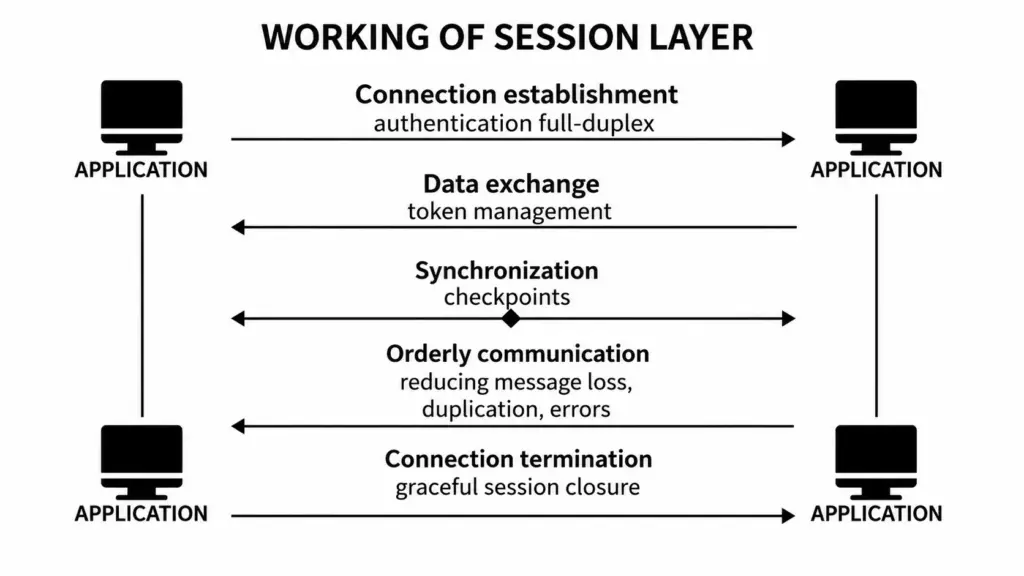
Figure: Working of session Layer
1. Session Setup
The Session Layer starts by establishing a connection between two systems. It sets up the rules for communication such as authentication and communication type. This ensures both devices agree on how data will be exchanged before transmission begins.
2. Control of Communication Flow
During communication, the Session Layer manages the flow of data between sender and receiver. It ensures that data is sent in a proper sequence and avoids conflicts. This helps in maintaining smooth and controlled interaction.
3. Checkpoint Management
The Session Layer adds checkpoints during long data transfers. These checkpoints act as saving points in communication. If a failure occurs, the session can restart from the last checkpoint instead of starting from the beginning.
4. Error Handling and Recovery
If any interruption or failure happens during communication, the Session Layer helps in recovery. It uses stored session information to resume data transfer. This reduces data loss and improves communication reliability.
5. Session Closing
Once all data has been successfully transferred, the Session Layer closes the session. It ensures that both systems confirm the end of communication. This helps in releasing resources and completing the process safely.
Session Layer Protocols
The Session Layer of the OSI model uses different protocols to manage and control communication sessions between two devices. These protocols help in establishing, maintaining, synchronizing, and terminating sessions in a structured way. They ensure smooth communication between applications over a network.
1. NetBIOS (Network Basic Input Output System)
NetBIOS is a commonly used session layer protocol that allows applications on different computers to communicate over a local network. It provides services like name resolution and session management. NetBIOS helps in establishing and maintaining connections between systems in LAN environments.
2. RPC (Remote Procedure Call)
RPC is a protocol that allows a program to request services from another program located on a different computer in the network. It makes communication easier by allowing remote systems to behave like local systems. RPC is widely used in distributed applications and client-server models.
3. PPTP (Point-to-Point Tunneling Protocol)
PPTP (Point-to-Point Tunneling Protocol) is a legacy VPN tunneling protocol that establishes tunnels over IP. It is now considered insecure and should be replaced by a modern VPN protocol such as WireGuard, IKEv2/IPsec, or OpenVPN.
4. SIP (Session Initiation Protocol)
SIP is used for initiating, maintaining, and terminating real-time communication sessions like voice and video calls. It is commonly used in VoIP (Voice over Internet Protocol) systems. SIP helps in controlling multimedia communication between users.
5. SAP (Session Announcement Protocol)
SAP is used to announce multimedia session information to multiple users in a network. It helps in broadcasting session details so that users can join available sessions. SAP is mainly used in streaming and conferencing applications.
Devices Associated with the Session Layer
The Session Layer works with different networking devices that help in controlling, managing, and securing communication sessions between systems. These devices ensure safe and smooth data exchange in a network.
1. Firewalls
Firewalls are security devices that monitor and control network sessions. They check incoming and outgoing session requests and block unauthorized access. This helps in protecting the system from attacks and ensures secure communication.
2. Proxy Servers
Proxy servers act as intermediaries between clients and servers. They manage session requests on behalf of users and forward them to the destination. This improves security, controls traffic, and helps in managing sessions efficiently.
3. Session Border Controllers (SBCs)
Session Border Controllers are used mainly in VoIP (Voice over Internet Protocol) networks. They manage and secure voice and video communication sessions. SBCs also help in protecting real-time communication from threats and ensuring stable connectivity.
4. Application Servers
Application servers are responsible for creating and maintaining user sessions for different applications. They manage multiple user requests at the same time and ensure continuous interaction. This helps in providing smooth and organized application services.
Advantages of the Session Layer
The session layer provides several benefits in network communication:
- Organized Communication: It manages communication sessions between two devices in an organized manner.
- Dialogue Management: It controls whether communication takes place in half-duplex or full-duplex mode.
- Synchronization: It provides checkpoints during long data transmissions.
- Session Recovery: It helps recover interrupted communication using synchronization information.
- Token Management: It prevents conflicts by controlling access to specific communication operations.
- Resource Management: It helps establish and terminate sessions properly, avoiding unnecessary resource usage.