Twisted Pair Cable
Twisted Pair Cable is a type of guided transmission medium used to transmit data and voice signals from one device to another. It consists of two thin, insulated copper wires twisted around each other in a spiral pattern. These copper wires act as conductors and carry electrical signals between transmitting and receiving devices. Each wire is covered with an insulating material to prevent direct contact and electrical short circuits.
The main purpose of twisting the wires is to reduce electromagnetic interference (EMI), external noise, and crosstalk. During data transmission, electrical signals may be affected by unwanted interference from nearby cables and electrical equipment. The twisting arrangement helps minimize these disturbances and improves signal quality, allowing data to be transmitted more reliably. An outer protective jacket is also provided to protect the wires from physical damage.
Twisted pair cables are widely used in telephone communication systems, computer networks, Ethernet connections, and internet connectivity. They are commonly preferred because of their low cost, simple construction, lightweight design, flexibility, and ease of installation. Based on the presence or absence of additional metallic shielding.
Types of Twisted Pair Cable
Twisted pair cables are mainly classified into two types based on the presence or absence of additional metallic shielding. They are Unshielded Twisted Pair (UTP) and Shielded Twisted Pair (STP).
1. Unshielded Twisted Pair (UTP):
Unshielded Twisted Pair (UTP) is a type of cable that consists of two or more pairs of insulated copper wires twisted around each other without any additional metallic shielding. Each pair is twisted at a specific rate to reduce electromagnetic interference (EMI) and crosstalk. The wires are covered with insulation, and all the pairs are enclosed within a protective outer jacket.
Characteristics of UTP Cable:
- No Additional Metallic Shielding: UTP cables do not contain aluminium foil or braided metal shielding around the wire pairs. They mainly depend on the twisting arrangement to reduce interference.
- Low Cost: These cables are less expensive than shielded cables because they have a simple construction and require fewer materials.
- Lightweight and Flexible: UTP cables are easy to bend, handle, and install in buildings, offices, and homes.
- Noise Reduction: The twisting of copper wires helps reduce electromagnetic interference and crosstalk, improving signal quality.
- Easy Installation and Maintenance: Their simple structure makes installation, testing, repairing, and replacement easier.
- Limited Interference Protection: They are more vulnerable to external electromagnetic interference than properly shielded cables.
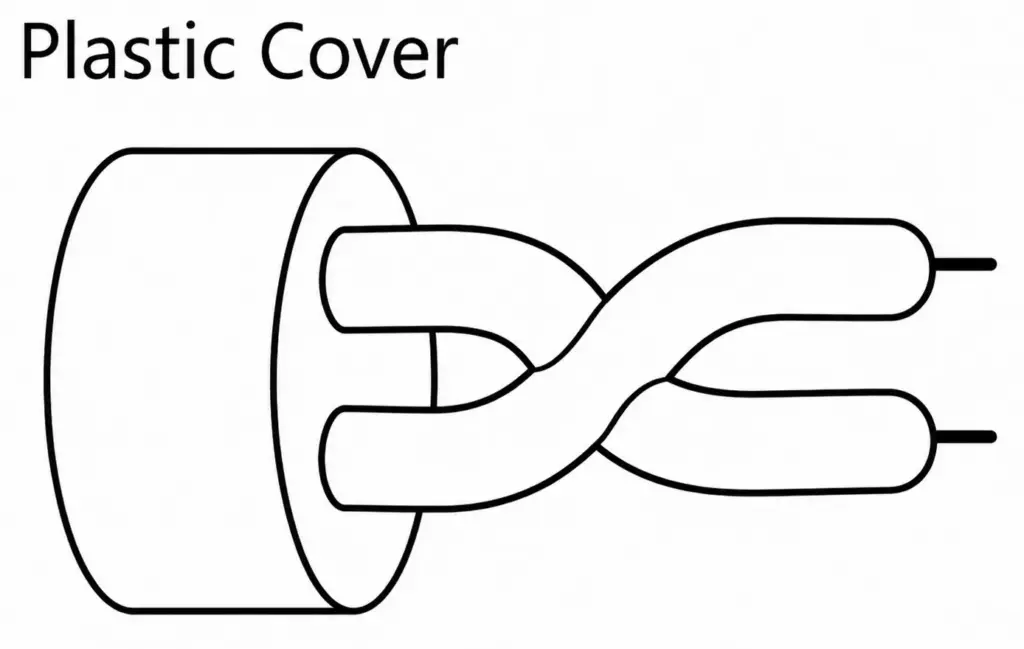
Figure: Unshielded Twisted Pair Cables
Construction of Unshielded Twisted Pair (UTP) Cable
Unshielded Twisted Pair (UTP) cable consists of multiple pairs of insulated copper wires twisted around each other without any additional metallic shielding. These components are enclosed within a protective outer jacket to form a flexible cable used for data and voice communication.
The construction of a UTP cable includes the following components:
1. Copper Conductors: Each wire is made of copper, which acts as a conductor and carries electrical signals from the transmitting device to the receiving device.
2. Insulation: Every copper conductor is covered with an insulating material, usually plastic. It prevents direct contact between the wires and avoids electrical short circuits.
3. Twisted Wire Pairs: Two insulated copper wires are twisted together to form a pair. Multiple pairs are arranged inside the cable. Twisting helps reduce electromagnetic interference (EMI) and crosstalk during signal transmission.
4. Outer Protective Jacket: All the twisted wire pairs are enclosed within an outer plastic covering. It protects the internal wires from physical damage, moisture, and environmental conditions.
Applications of UTP Cable:
- Used in telephone communication systems for transmitting voice signals.
- Used in Local Area Networks (LANs) to connect computers, printers, and other devices.
- Commonly used in Ethernet connections for wired internet access.
- Used in homes, schools, and offices for computer networking.
- Used in network connections between routers, switches, and computers.
2. Shielded Twisted Pair (STP):
Shielded Twisted Pair (STP) is a type of cable that consists of pairs of insulated copper wires twisted around each other and covered with additional metallic shielding. The shielding is generally made of aluminium foil or braided metal and is designed to protect the wires from external electromagnetic interference (EMI), electrical noise, and crosstalk. Depending on the cable design, shielding may surround individual pairs or the entire group of twisted pairs.
STP cables provide better protection against interference than UTP cables. They are especially useful in environments where electrical equipment, motors, and other devices generate electromagnetic noise. However, they are comparatively expensive and require proper installation and grounding to achieve effective shielding.
Characteristics of STP Cable:
- Additional Metallic Shielding: Contains aluminium foil or braided metal shielding around individual pairs or the entire cable to provide extra protection.
- Better Noise Protection: The metallic shielding reduces the effect of external electromagnetic interference and unwanted electrical noise.
- Reduced Crosstalk: The combination of twisting and shielding helps minimize interference between nearby wire pairs.
- Higher Cost: STP cables are more expensive than UTP cables because of their additional shielding materials.
- Installation Requirements: They require careful installation and proper grounding to ensure effective shielding.
- Comparatively Less Flexible: The additional metallic layer makes these cables heavier and less flexible than UTP cables.
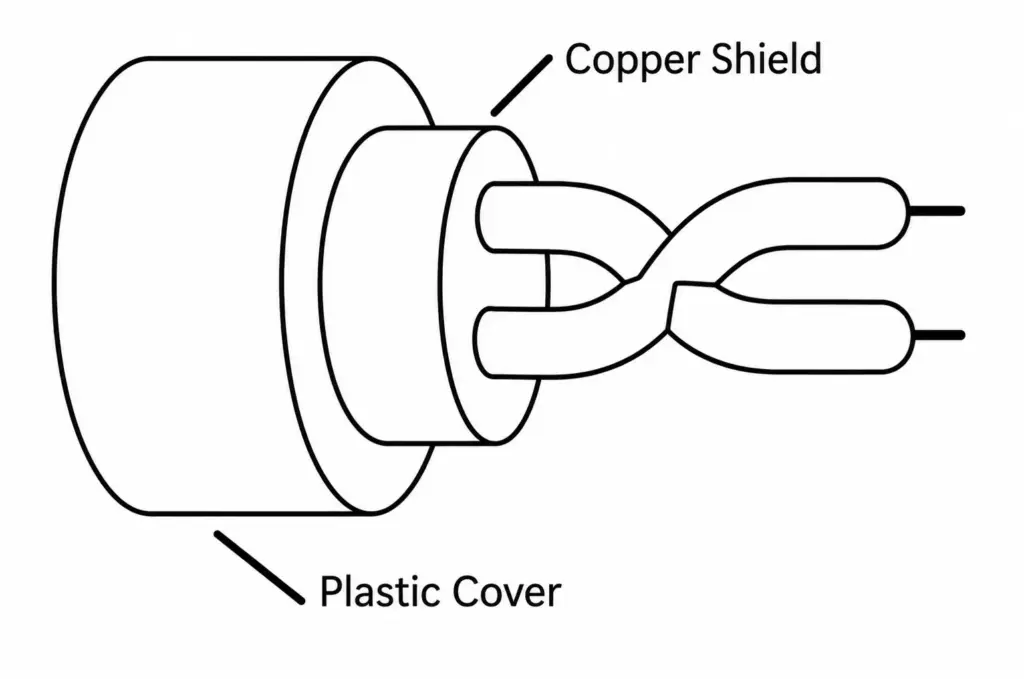
Figure: Shielded Twisted Pair Cables
Construction of Shielded Twisted Pair (STP) Cable
Shielded Twisted Pair (STP) cable consists of multiple pairs of insulated copper wires twisted around each other and covered with additional metallic shielding. The shielding is generally made of aluminium foil or braided metal, which protects the wires from electromagnetic interference (EMI), external noise, and crosstalk.
The construction of an STP cable includes the following components:
1. Copper Conductors: Each wire is made of copper, which acts as a conductor and carries electrical signals between transmitting and receiving devices.
2. Insulation: Each copper conductor is covered with an insulating material, usually plastic, to prevent direct contact between wires and avoid electrical short circuits.
3. Twisted Wire Pairs: Two insulated copper wires are twisted together to form a pair. Multiple pairs are arranged inside the cable. Twisting helps reduce electromagnetic interference and crosstalk.
4. Metallic Shielding: An additional layer of metallic material, such as aluminium foil or braided metal, surrounds individual wire pairs or the entire group of pairs. It provides extra protection against external electromagnetic interference and electrical noise.
5. Outer Protective Jacket: All the internal components are enclosed within an outer plastic covering. It protects the cable from physical damage, moisture, and environmental conditions.
Applications of STP Cable:
- Used in industrial networks where heavy machinery generates electromagnetic interference.
- Used in data centers and commercial networking environments.
- Used in communication systems that require additional protection against electrical noise.
- Used in factories and manufacturing facilities to connect networking equipment.
- Used in areas where reliable data transmission is required despite high electrical interference.
Differences Between UTP and STP Cable
UTP (Unshielded Twisted Pair) and STP (Shielded Twisted Pair) are two commonly used types of twisted pair cables in computer networks and communication systems. Both cables consist of insulated copper wires twisted together to transmit data and voice signals. However, they differ in their construction, shielding, interference protection, cost, flexibility, and installation requirements.
| S.No. | UTP Cable | STP Cable |
|---|---|---|
| 1. Full Form | UTP stands for Unshielded Twisted Pair. | STP stands for Shielded Twisted Pair. |
| 2. Construction | Consists of insulated copper wire pairs twisted together without additional metallic shielding. | Consists of insulated copper wire pairs twisted together with additional metallic shielding. |
| 3. Shielding | Does not contain additional metallic shielding around the wire pairs. | Contains metallic shielding, such as aluminium foil or braided metal, around individual pairs or the entire cable. |
| 4. Interference Protection | Mainly relies on wire twisting to reduce electromagnetic interference (EMI). | Uses both wire twisting and metallic shielding to provide additional protection against electromagnetic interference. |
| 5. Crosstalk | Twisting helps reduce crosstalk between nearby wire pairs. | Twisting and additional shielding help reduce crosstalk between wire pairs. |
| 6. Cost | Less expensive because of its simple construction and fewer materials. | More expensive because of the additional metallic shielding. |
| 7. Weight | Lightweight because it does not contain extra metallic shielding. | Comparatively heavier because of the additional shielding layer. |
| 8. Flexibility | More flexible and easier to bend during installation. | Comparatively less flexible because of its shielding layer. |
| 9. Installation | Easy to install and does not require special grounding for shielding. | Requires careful installation and proper grounding to ensure effective shielding. |
| 10. Maintenance | Easy to test, repair, and replace because of its simple construction. | Maintenance may require additional care because of its shielding and grounding requirements. |
| 11. Performance | Provides reliable data transmission in environments with relatively low electromagnetic interference. | Provides better protection against external interference, helping maintain signal quality in electrically noisy environments. |
| 12. Applications | Commonly used in homes, schools, offices, telephone systems, and Ethernet networks. | Commonly used in industrial networks, data centers, and environments with high electrical interference. |