Data abstraction means hiding the extra, complicated details and showing users only what they actually need to see. A database is very complex on the inside. So abstraction lets users work with data in a simple way, without worrying about how it is physically stored on hardware.
database is divided into three levels (layers).
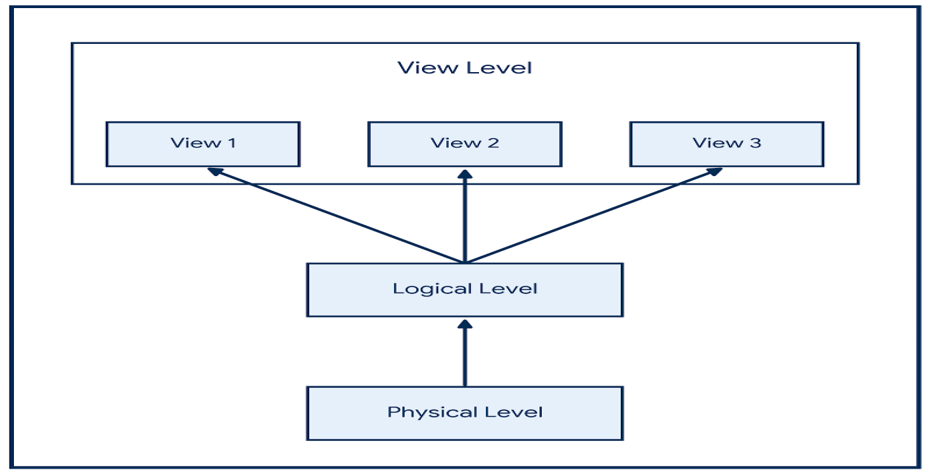
The Three Levels of Database Architecture
1. Physical Level (Internal Level)
- This is the lowest level of the database.
- It deals with how data is actually stored on the hardware (disk).
- It handles deep technical stuff like file organization, indexing, memory allocation, and data compression.
- Normal users never see this level. Only system designers and DBAs work here.
2. Logical Level (Conceptual Level)
- This is the middle level.
- It focuses on what data is stored, not how it is stored physically.
- It defines things like tables, columns (attributes), data types, and relationships between tables.
- DBAs and application developers work at this level. They design the database structure without worrying about hardware details.
3. View Level (External Level)
- This is the highest level, made for normal, everyday users.
- It shows only a specific part of the database to each user. The rest stays hidden this gives both security and simplicity.
- One database can have many different views for different types of users.
Example: College Database
| Level | What it does |
| Physical Level | Stores student records as indexed files on the disk. |
| Logical Level | Defines a Student table with columns: RollNo, Name, Branch, Marks. |
| View Level | Shows only Name and Marks to a teacher checking results fee details stay hidden. |